
The Problem We Found
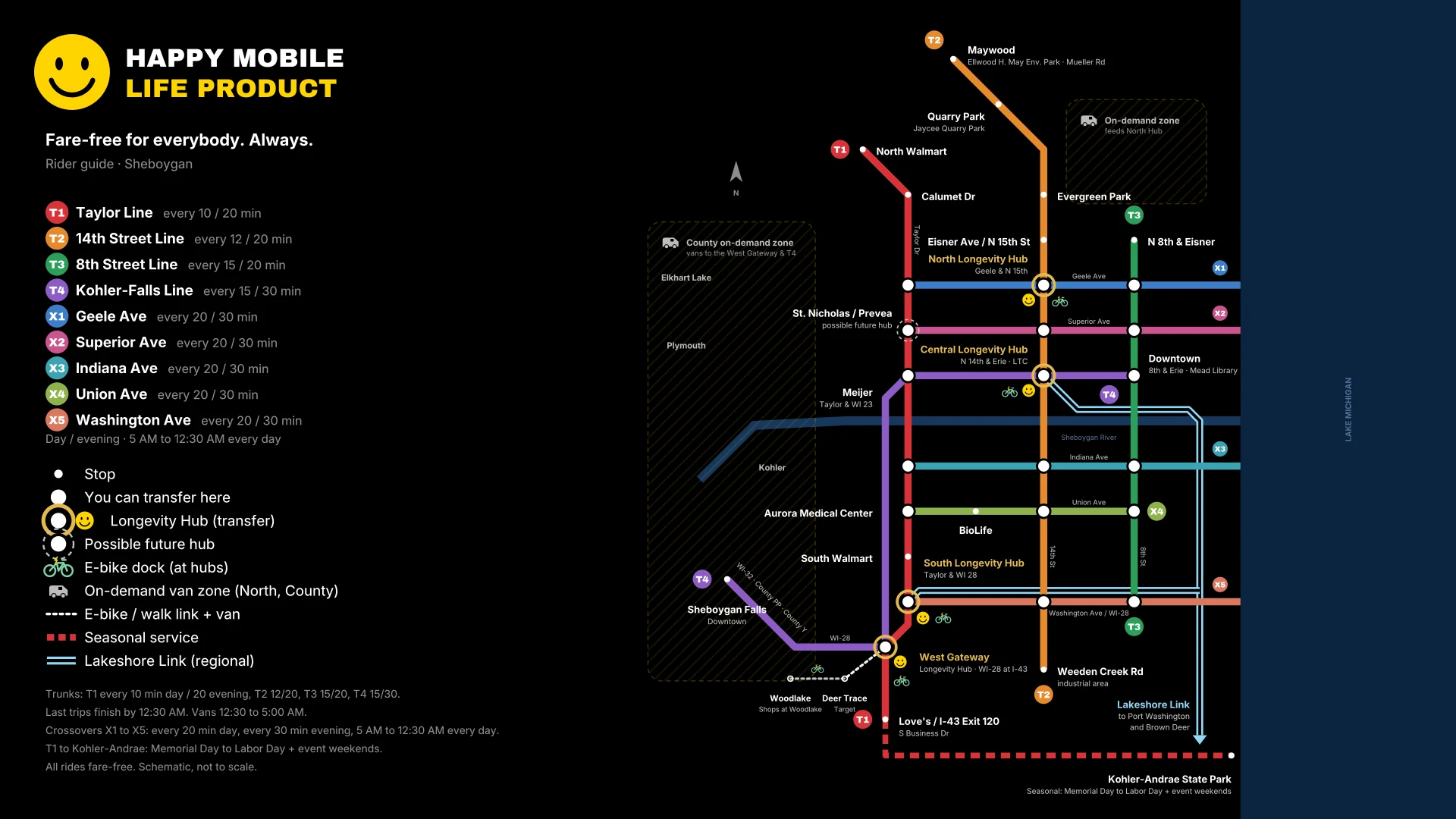
A simple flows graphic slot (arrows from Sheboygan to Kohler, Plymouth, Sheboygan Falls and Milwaukee)
About 9,100 of 23,600 working residents work in the city. Everyone else crosses the city line.
We didn't start with a map. We started with how people actually move.
Where people work
Census job-flow data (LEHD LODES, 2023) tells a clear story.
- About 23,600 Sheboygan residents hold jobs.
- About 24,600 jobs are located in the city.
- Only about 9,100 people both live and work in Sheboygan.
That means most working residents leave the city every workday, and most people who work here come from somewhere else. The biggest destinations for city residents are the Village of Kohler, Plymouth, the City of Sheboygan Falls, the nearby towns and Milwaukee. Manitowoc County sends more workers into the city than any other county outside Sheboygan County. Each day, roughly 1,900 residents commute out to Milwaukee and Ozaukee counties and about 1,450 commute in.
Sheboygan isn't a closed loop. It's the center of a regional web of daily trips.
How people get there
Census survey data (ACS 2020-2024) shows how those trips happen.
- 75.7% of workers drive alone.
- 0.5% ride transit.
- 8.1% of households, about 1,726 homes, have no vehicle at all.
- More than half of commutes are under 15 minutes, a perfect length for buses and e-bikes.
So the trips are short, the need is real, and transit carries almost none of it. That gap is the problem we set out to solve.
What riders want
Riders have said what they want. In the transit plan's own survey, the top requests were more destinations, more Saturday service, more evening service and Sunday service.
The ways out of town
Leaving the city without a car is harder still. For most residents, living in Sheboygan means owning a car just to reach the rest of the world.
We call that the hidden tax: you pay it in car payments, insurance and repairs, whether or not you can afford them.