
3. A grid of frequent lines, not a hub-and-spoke
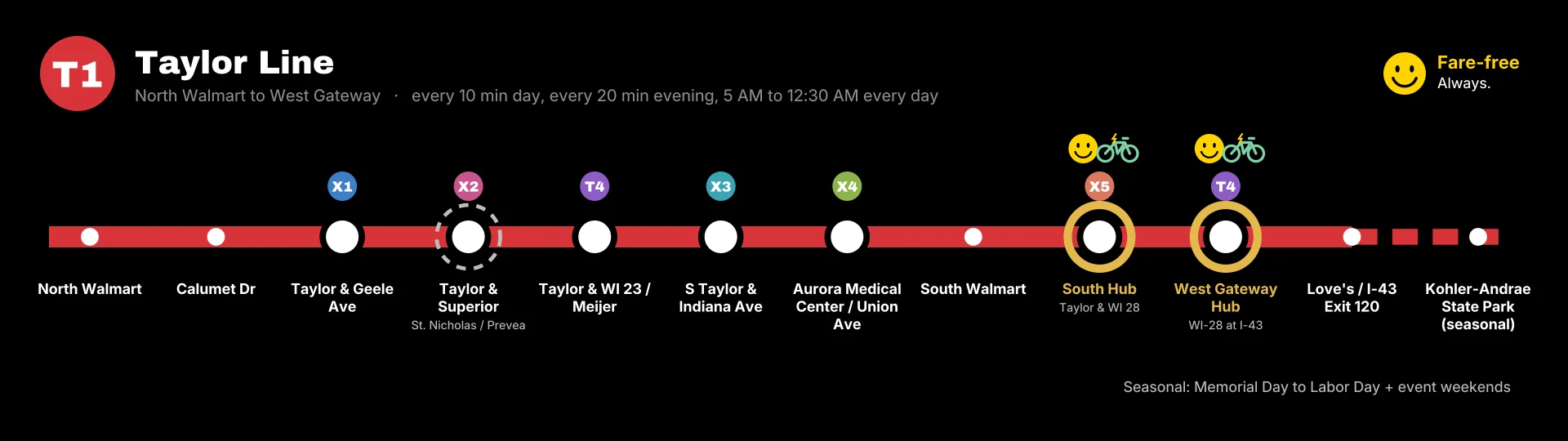
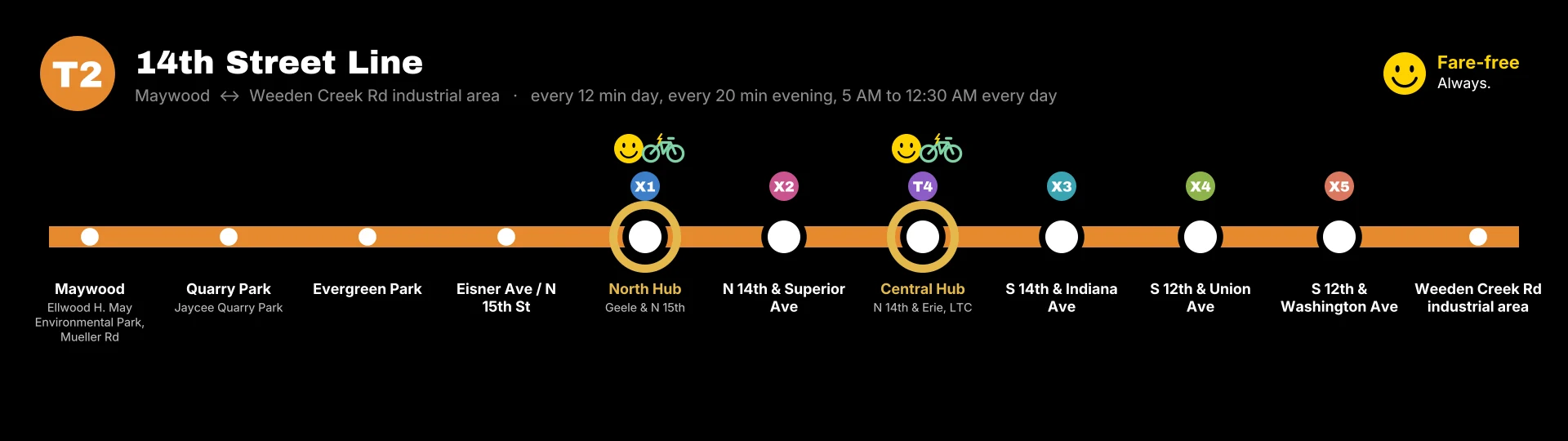
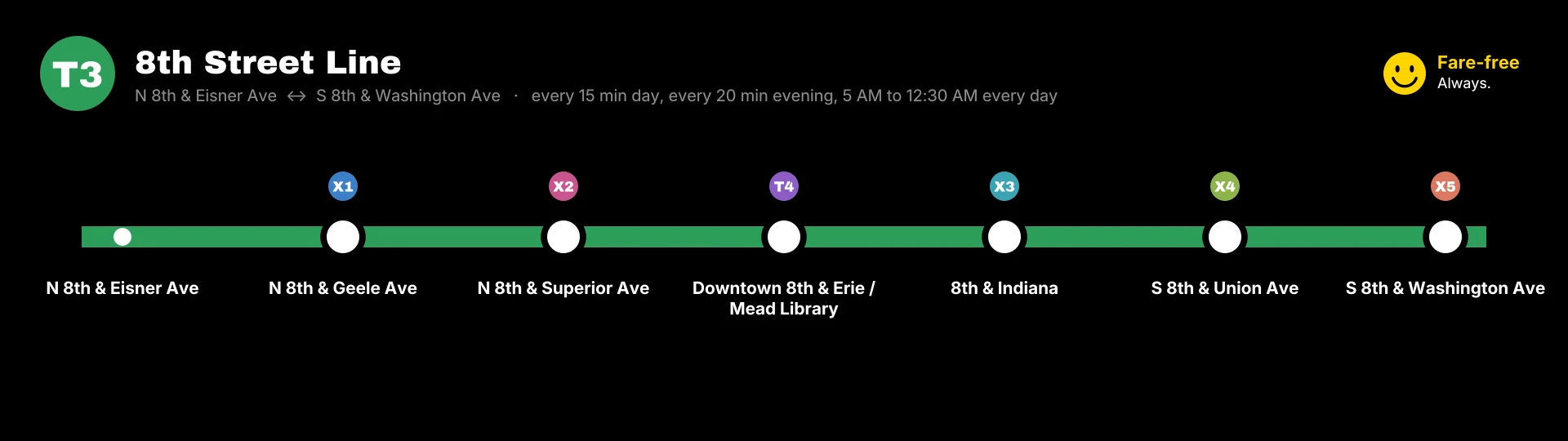
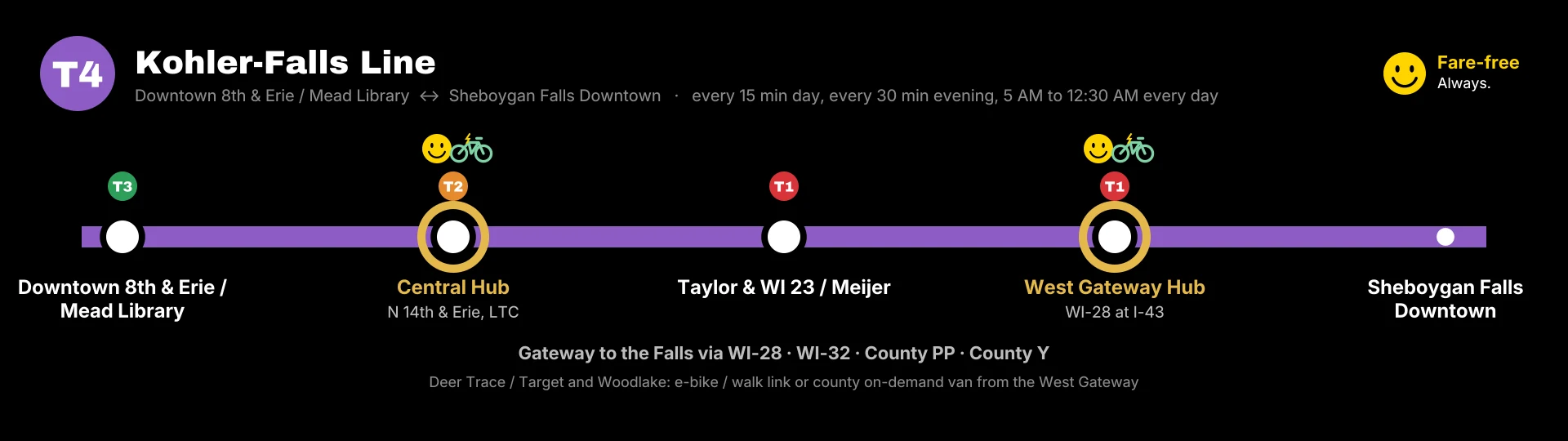
What we chose: four main lines that come often, and five short crossovers that tie them together.
- T1 Taylor Line: North Walmart to the West Gateway Hub, every 10 minutes by day and every 20 in the evening, with the T1 South extension to Love's and Kohler-Andrae in season.
- T2 14th Street Line: Maywood and the north-side parks to the Weeden Creek industrial area, every 12 minutes by day and every 20 in the evening.
- T3 8th Street Line: north side to south side through downtown, every 15 minutes by day and every 20 in the evening.
- T4 Kohler-Falls Line: from downtown at 8th and Erie, through the Central Hub, Meijer and the West Gateway Hub, to downtown Sheboygan Falls, every 15 minutes by day and every 30 in the evening.
- Crossovers X1 Geele, X2 Superior, X3 Indiana, X4 Union and X5 Washington: east-west links every 20 minutes by day and every 30 in the evening, from the lakeshore to Taylor Drive.
What else we considered:
- Keeping a single downtown pulse, where every bus meets at one point.
- Many lines, each coming rarely, to put a bus near every door.
- Long one-way loops.
Why: we mapped where people live and work, the I-43 interchanges, the river crossings and the main corridors. The city's shape points to a few strong north-south spines (Taylor, 14th and 8th) crossed by east-west avenues. A grid lets people go across town directly, transferring at any crossing instead of always going downtown first.
We chose frequency over coverage for the buses. When a bus comes every 10 to 15 minutes, you stop planning and just go. A bus that comes once an hour near your door is less useful than one that comes every 12 minutes a short walk away. Coverage still matters, so we gave it to the vans (see decision 5).
Every main line crosses the Sheboygan River on an existing road bridge. The network works with or without any new bridge.
Why T4 starts downtown at 8th and Erie: we first considered starting the Kohler-Falls line at the Central Hub. Starting one stop earlier, at 8th and Erie by the Mead Library, gives downtown a one-seat ride to the West Gateway and the Falls. It also links T3 riders with no extra walk, and the Central Hub stays on the route for transfers.
Come often, so you never need a timetable.